
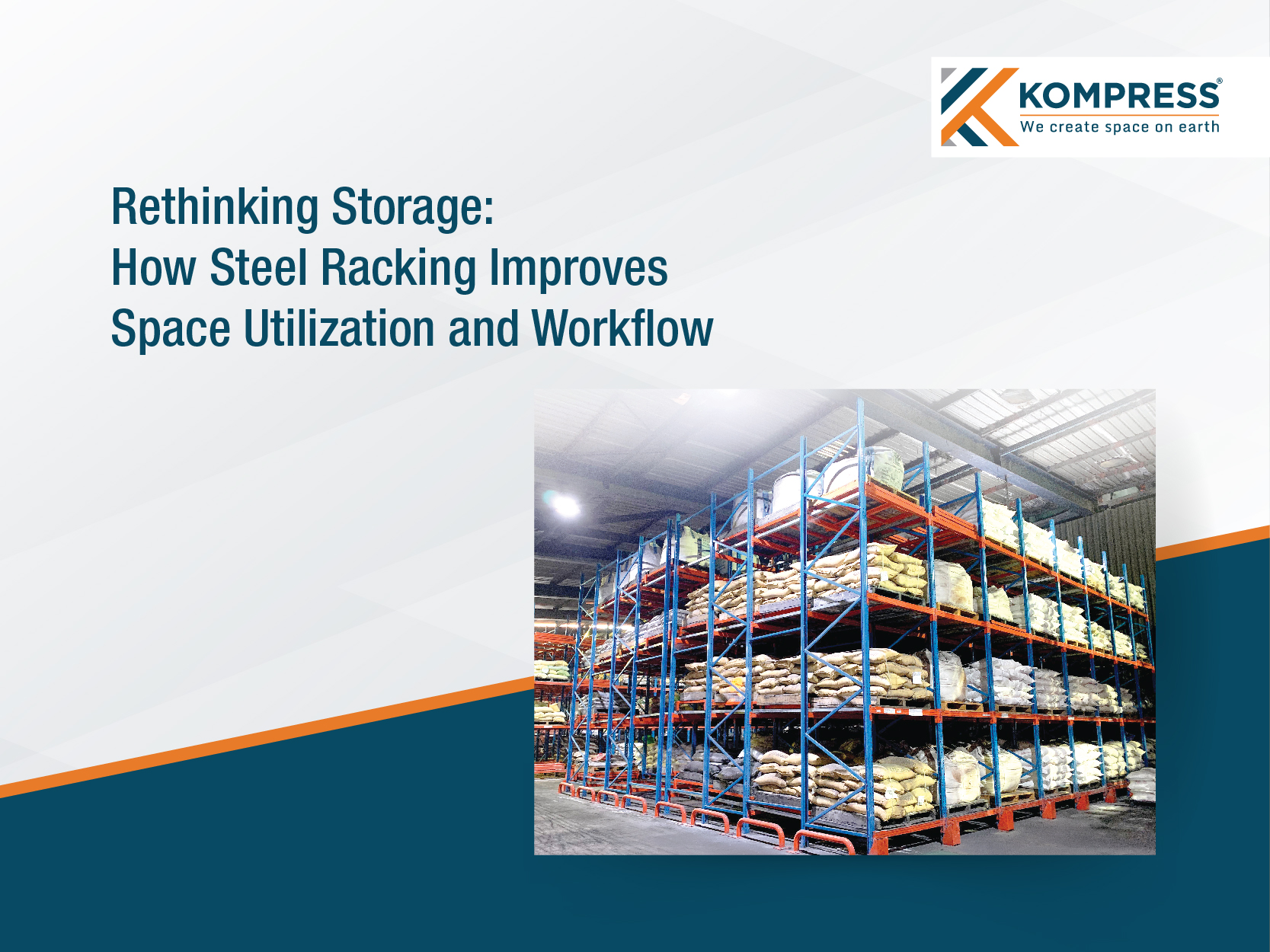
As businesses grow, so do their storage challenges. Increasing inventory, expanding product lines, and evolving operational requirements often put pressure on existing facilities. Many organizations assume the only solution is to expand their workspace, but in reality, better planning can often deliver better results. Steel racking is one of the most effective ways to optimize available space while creating a storage environment that supports productivity, accessibility, and future growth.
A well-planned steel racking system does more than hold inventory—it creates structure, improves workflow, and ensures every square foot contributes to business efficiency.
Why Space Utilization Matters
Space is one of the most valuable assets in any warehouse or industrial facility. Yet, it is often underutilized due to poor storage layouts, overcrowded aisles, or unorganized inventory.
When storage is not planned efficiently, employees spend more time locating products, material movement becomes slower, and valuable floor space goes unused. These inefficiencies can affect productivity, increase operating costs, and limit a business's ability to scale.
Instead of increasing warehouse size, businesses can often achieve better results by improving how existing space is organized through steel racking solutions.
Steel Racking: The Foundation of Efficient Operations
Efficient operations begin with an organized storage layout. Steel racking creates dedicated storage zones that make inventory easier to store, locate, and manage. Rather than relying on cluttered storage areas, businesses can build a systematic layout that supports smoother day-to-day operations.
A well-designed steel racking system improves inventory visibility, reduces unnecessary movement, and creates better access to stored materials. As inventory grows, steel racking provides the flexibility to expand storage capacity while maintaining an organized workflow.
Whether used in warehouses, manufacturing facilities, logistics centers, or distribution hubs, steel racking helps businesses build a storage system that grows with their operations.
Choosing the Right Racking Shelves
No two businesses store inventory in the same way. That's why selecting the right racking shelves is an important part of designing an efficient storage system.
The ideal racking shelves depend on factors such as product dimensions, load capacity, stock rotation, and retrieval frequency. A well-planned shelving layout keeps products organized, improves accessibility, and supports faster inventory handling.
As business requirements evolve, scalable racking shelves make it easier to adapt storage layouts without major operational disruptions. Investing in quality racking shelves also helps businesses maintain consistency, improve organization, and prepare for future expansion.
When to Integrate a File Compactor Storage System
While steel racking is ideal for storing inventory and industrial materials, many organizations also need secure storage for documents and records. This is where a file compactor storage system becomes an important part of an overall storage strategy.
A file compactor storage system is designed to maximize document storage by eliminating unnecessary aisles and creating high-density storage. It is widely used in offices, hospitals, educational institutions, banks, legal firms, and government organizations where quick access to important records is essential.
For businesses that manage both inventory and documentation, combining steel racking with a file compactor storage system creates a complete storage solution. While steel racking handles operational inventory, a file compactor storage system keeps records organized, secure, and easily accessible.
Building a Smarter Storage Strategy
The most effective storage solutions are those designed around the way a business operates. Instead of treating storage as a collection of individual products, organizations should focus on creating an integrated system that improves efficiency across departments.
By combining steel racking, well-planned racking shelves, and a file compactor storage system, businesses can create dedicated storage zones for different operational needs. This approach improves accessibility, supports better inventory management, and makes future expansion easier without increasing the facility footprint.
Smart storage planning also helps reduce wasted space, improve workflow, and create a more organized working environment that benefits both employees and operations.
Conclusion
Efficient storage is about more than creating additional capacity—it's about creating a workspace that supports productivity and long-term growth. A well-designed steel racking system helps businesses optimize available space, improve workflow, and maintain organized operations as storage requirements evolve.
When supported by the right racking shelves and a file compactor storage system, businesses can build a flexible storage strategy that adapts to changing needs while making better use of every square foot.
At Kompress India, we believe smarter storage starts with smarter planning—because every business performs better when its storage works as efficiently as its people.

 kompressindia.com