
Think about the last time someone in your office needed an old contract, payment receipt, or employee record. Was it easy to find, or did someone have to search through drawers, folders, and boxes before getting the right document?
Most businesses deal with paperwork every day. Even with digital systems, physical documents remain part of office operations. Over time, these records pile up, and keeping track of them becomes difficult.
The bigger question isn't just where to keep these files. It's knowing which records are worth keeping, how long they are needed, and when they can be safely removed.
A proper record management system, supported by office filing cabinets, can make this process easier while keeping important information organized and accessible.
Why Is Record Management Important for Businesses?
Record management is the process of organizing, storing, protecting, and disposing of business documents throughout their useful life.
Every business handles different types of records. These may include employee details, customer agreements, invoices, tax documents, and financial reports. Some are needed for daily work, while others must be kept for legal, financial, or business reasons.
Without a clear system, files can get mixed up or misplaced. Employees may waste time looking for information, and sensitive documents could end up in the wrong hands.
A good record management process helps businesses decide what to keep, where to store it, and who should have access.
How Long Should Businesses Keep Important Documents?
There is no single retention period that applies to every business document. The required duration depends on the type of record, applicable laws, industry rules, and company policies.
For example, tax and accounting records may need to be kept for several years, while certain employee or legal documents may have different retention requirements. Some records may also need to remain available while an audit, dispute, or investigation is ongoing.
Businesses in India should review the rules that apply to their industry and document types before deciding when to dispose of records.
Instead of keeping everything indefinitely, companies can create a document retention schedule. This identifies each record category, its required retention period, and the action to take once that period ends.
It also prevents storage areas from filling up with paperwork that no longer serves a purpose.
Separate Active Records From Archived Documents
Not every file needs to be within reach every day. Some documents are used regularly, while others may only be needed during an audit or an occasional review.
Keeping both types together can make filing cabinets difficult to manage.
A better approach is to divide records into active and archived categories. Active files include documents employees use frequently, such as current contracts or ongoing project records. Archived records are documents that must be retained but are rarely accessed.
For example, an HR department may need current employee files close to its work area. Records of former employees can be moved to a separate, secure archive, based on the company's retention policy.
This arrangement makes everyday filing easier and gives older records a defined place.
Where Should Businesses Store Physical Records?
Physical records should be stored in a secure, dry, and accessible location that suits their importance and frequency of use.
Leaving important documents on open shelves or unattended desks may expose them to damage, loss, or unauthorized access.
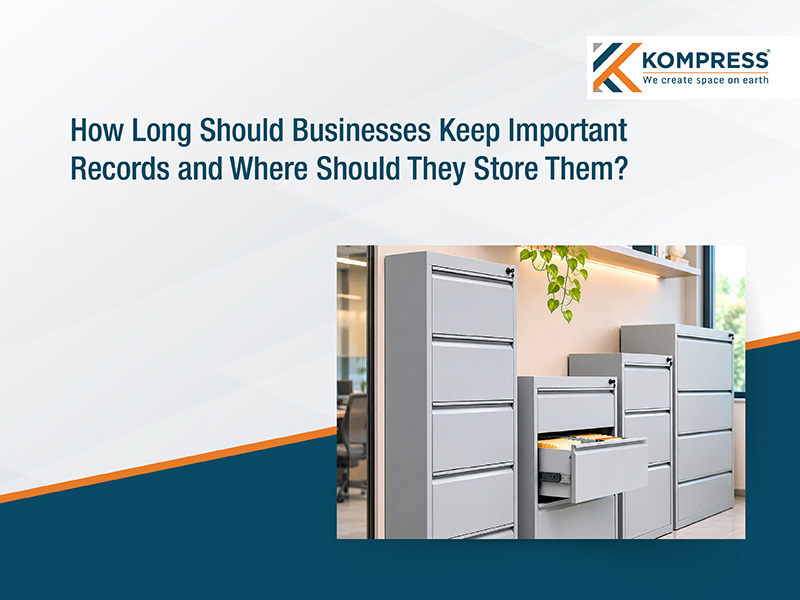
Office filing cabinets provide dedicated space for paperwork and help departments maintain a structured filing process. Files can be arranged by department, year, project, or document type, making them easier to locate when needed.
For example, an accounts department may organize files by financial year, while a legal team may prefer separate sections for contracts and ongoing cases.
The storage method should match how employees search for information. A simple system that everyone understands is often more useful than a complicated arrangement that is difficult to maintain.
How Can Businesses Protect Confidential Records?
Some office documents contain information that should only be available to authorized employees.
Salary details, customer agreements, financial statements, and personal information all require careful handling.
Businesses should identify which records are confidential and decide who needs access to them. Lockable storage can provide a useful physical safeguard when combined with clear access rules.
For example, employee records may be stored in a locked cabinet managed by the HR department, while general administrative documents may remain accessible to a wider team.
Products within the Lockers and Filing Cabinets category can help businesses separate personal storage needs from document storage.
However, locks alone are not enough. Companies should also establish procedures for issuing keys, returning files, tracking access when necessary, and reporting missing documents.
Build a Filing System That Employees Can Follow
Even good storage equipment won't help if employees don't follow the same filing method.
Imagine three people storing invoices in different places. One sorts them by date, another by customer name, and the third simply adds them to the nearest available drawer.
Finding a particular invoice later becomes unnecessarily difficult.
A consistent filing method solves this problem. Businesses can assign specific cabinets or drawers to different departments and use clear labels to identify document categories.
A file register can also help track records that are moved or borrowed. This is particularly useful when multiple employees need access to the same documents.
The goal is to create a process that employees can follow without needing special instructions every time they handle a file.
When Should Businesses Dispose of Old Records?
Keeping every document forever may seem like the safest option, but unnecessary storage can create its own problems.
Old records occupy space, make filing harder, and may increase the amount of sensitive information a business needs to protect.
Businesses should review archived documents regularly and identify records that have reached the end of their approved retention period.
Before disposal, confirm that no legal hold, investigation, audit, or other requirement prevents destruction.
Confidential documents should be destroyed securely, using an appropriate shredding service or another approved method.
A record of the disposal process may also be useful for internal accountability.
Regular reviews help businesses maintain an organized archive without losing information they are still required to keep.
Frequently Asked Questions
What is the best way to organize business records?
The best approach is to group records by department, document type, or year and assign each category a clear storage location. Using labeled folders and office filing cabinets can make files easier to manage and retrieve.
How long should a company keep old records?
Retention periods depend on document type, industry, applicable laws, and company policies. Businesses should follow a documented retention schedule and review legal requirements before disposing of records.
Are filing cabinets suitable for confidential documents?
Yes. Lockable filing cabinets can provide controlled physical storage for sensitive records. They should be used alongside appropriate access policies and secure document handling procedures.
Make Document Management Part of Everyday Work
Good record management isn't about keeping every file forever. It's about knowing what needs to be saved, where it belongs, and when it can be safely removed.
When businesses establish clear retention rules and practical filing methods, employees can manage documents with greater confidence and less confusion.
Kompress India offers office filing cabinets designed for different workplace requirements, including vertical and lateral models with central locking features. Its Lockers and Filing Cabinets range supports organized storage across offices and commercial environments.
Explore Kompress India's filing cabinet solutions to create a more practical system for managing important business records.

 kompressindia.com
