
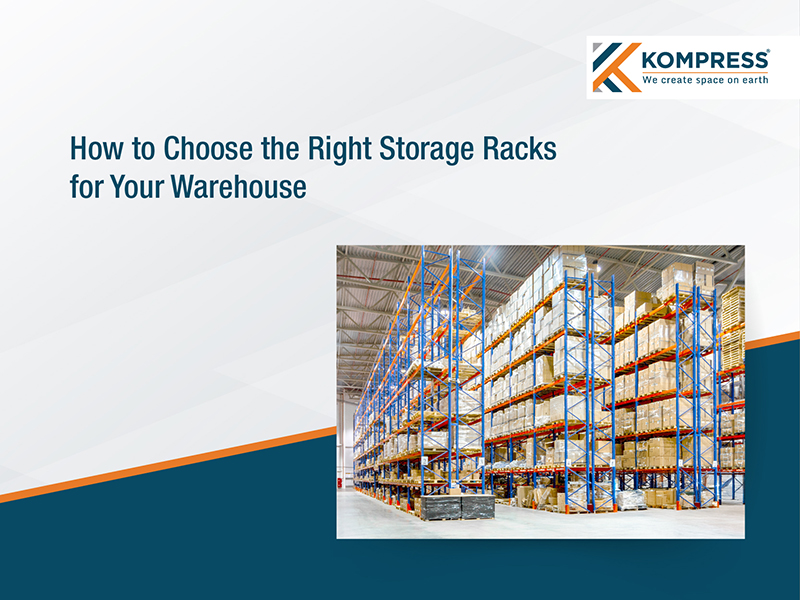
Choosing the right storage system can have a major impact on how efficiently your warehouse operates. The right storage racks can help you use available space better, organize inventory, improve accessibility, and make daily operations safer.
However, not every warehouse has the same requirements. Product type, available floor space, ceiling height, load capacity, inventory movement, and storage methods all play a role in selecting the right system.
With several types of warehouse racking available, making the right choice requires more than simply comparing prices. You need a storage solution that matches your operation today and can support future growth.
Why Choosing the Right Storage Racks Matters
A warehouse is more than a place to keep products. It is a working environment where goods are received, stored, moved, picked, and dispatched.
Poorly planned storage can lead to:
• Wasted floor space
• Difficult inventory access
• Longer picking times
• Damaged products
• Unsafe working conditions
• Limited storage capacity
• Higher operating costs
The right storage racks create a structured storage environment. They allow you to make better use of both floor space and vertical space while keeping inventory organized.
1. Understand What You Need to Store
The first step is to understand your inventory.
Consider the size, weight, shape, and quantity of the products you store. Different products require different storage configurations.
For example, lightweight cartons may work well with shelving or light-duty racks. Heavy pallets require a stronger system designed for high loads.
You should also consider whether your inventory consists of:
• Palletized goods
• Cartons and boxes
• Long materials
• Small parts
• Heavy equipment
• Documents and files
• Fast-moving products
• Slow-moving inventory
Your products should determine the type of racking you choose, rather than the other way around.
2. Measure Your Available Warehouse Space
Before selecting storage racks, measure your warehouse carefully.
Look beyond the available floor area. Your ceiling height can provide valuable additional storage capacity.
Consider:
• Warehouse length and width
• Clear ceiling height
• Column locations
• Door and loading bay positions
• Aisle requirements
• Fire safety clearances
• Equipment movement areas
• Emergency exits
Using vertical space effectively can significantly increase storage capacity without expanding the warehouse footprint.
A well-designed warehouse racking system should work around the building rather than forcing the building to work around the racks.
3. Consider Your Load Requirements
Every storage rack has a specific load capacity. Choosing a system without understanding your load requirements can create safety and operational problems.
Determine the weight of the products you need to store and how that weight will be distributed across each rack level.
For pallet storage, consider both the pallet weight and the number of pallets stored at each level.
Heavy-duty applications may require robust systems such as selective pallet racks, drive-in racks, push-back racks, or pallet shuttle systems.
Always make sure the selected storage racks are designed for the required load.
4. Choose the Right Type of Storage Racks
Different warehouse operations require different storage solutions.
Selective Pallet Racking
Selective pallet racking is one of the most common warehouse storage systems. It provides direct access to individual pallets and works well when you need access to a wide range of products. It is particularly useful for warehouses with multiple SKUs.
Drive-In Racking
Drive-in racking is designed for high-density storage. Forklifts can enter the rack structure to place and retrieve pallets. It is suitable when storing large quantities of similar products and when maximum storage density is more important than individual pallet access.
Push-Back Racking
Push-back systems allow multiple pallets to be stored at different depths. Pallets are loaded and retrieved from the same aisle. This can increase storage density while maintaining relatively convenient access.
5. Think About Accessibility and Inventory Movement
Storage density is important, but accessibility matters just as much.
Ask yourself:
• How often do products need to be accessed?
• How quickly must orders be picked?
• Which products move the fastest?
• What material-handling equipment do you use?
• Do you need direct access to every pallet?
If your warehouse handles a large number of SKUs with frequent picking, direct-access racking may be more appropriate.
If you store large quantities of the same product, a high-density system may offer better space utilization.
The right balance between storage density and accessibility can improve warehouse productivity.
6. Consider Your Material-Handling Equipment
Your storage system must work with your existing equipment.
Forklifts, reach trucks, stackers, pallet jacks, and other equipment have different operating requirements.
For example, aisle width should be planned according to the equipment being used. Rack height should also match the lifting capability of the equipment.
Poor coordination between equipment and warehouse racking can reduce efficiency and create unnecessary safety risks.
7. Plan for Future Growth
Warehouse requirements can change quickly as your business grows.
Avoid selecting a storage solution based only on your current inventory. Think about your expected product volume, new SKUs, and future operational requirements.
A modular storage system can make it easier to add or modify rack configurations as your business changes.
Planning ahead can prevent expensive redesigns later.
8. Prioritize Safety and Quality
Safety should always be a key consideration when choosing storage racks.
Look for systems designed with appropriate structural strength, stable construction, and suitable safety features.
Your warehouse team should also follow proper loading procedures and avoid exceeding the rated capacity of the racks.
Regular inspections can help identify damaged components before they become serious problems.
9. Work With an Experienced Storage Solution Provider
Choosing the right rack is only part of the process. Proper warehouse planning, system design, installation, and support are equally important.
An experienced storage solution provider can evaluate your warehouse layout, storage requirements, product characteristics, material-handling equipment, and future needs.
Instead of simply selling individual racks, the right partner can help develop a complete storage strategy.
Conclusion
Choosing the right storage racks is an important decision for any warehouse. The right system can help you increase capacity, improve organization, simplify inventory access, and make better use of your available space.
Start by understanding your products and measuring your warehouse. Then evaluate load requirements, accessibility, material-handling equipment, safety, and future growth.
Whether you need selective pallet racking, high-density storage, drive-in systems, push-back racks, or mobile storage, the goal should always be the same: create a storage system that works efficiently for your operation.
A well-planned warehouse racking system is not simply a place to store goods. It is an important part of your overall warehouse strategy.
Frequently Asked Questions
What are storage racks used for?
Storage racks are used to organize and store products, materials, pallets, cartons, and other inventory. They help warehouses make better use of available floor and vertical space.
How do I choose the right storage racks for my warehouse?
Start by evaluating your product type, load requirements, warehouse dimensions, inventory movement, accessibility needs, and material-handling equipment. These factors will help determine the most suitable racking system.
What is warehouse racking?
Warehouse racking refers to structural storage systems designed to organize goods within a warehouse. Different systems are available for pallet storage, high-density storage, small parts, long materials, and other applications.
Which storage racks are best for palletized goods?
Selective pallet racking is a popular option for palletized goods because it provides direct access to individual pallets. However, drive-in, push-back, pallet shuttle, and other systems may be better depending on storage density and access requirements.
Can storage racks help save warehouse space?
Yes. Properly designed storage racks can make better use of vertical space and improve the organization of floor space. High-density and mobile storage systems can provide additional space-saving benefits depending on the application.
How important is rack load capacity?
Load capacity is critical. Every rack should be selected and configured according to the weight and distribution of the products being stored. Exceeding the rated capacity can create serious safety risks.
Should I plan my warehouse racking for future growth?
Yes. Planning for future inventory growth can make your storage system more flexible and reduce the need for expensive changes later. Modular and scalable systems can be particularly useful for growing businesses.

 kompressindia.com